
Blogs
May 19, 2025 2025-06-25 19:24Blogs


10 Fun Songs to Learn on Guitar That’ll Keep You Going
Reading time: 8–10 minutes According to Fender, 90% of beginner guitarists quit within their first year, and it’s rarely because guitar is too hard. Most of the time, it’s because they lose motivation. The fastest fix is learning fun songs to learn on guitar that you actually recognize and care about. This list gives you 10 songs chosen for one reason above everything else: they’re genuinely enjoyable to play. Each entry covers why it’s fun, what skill it quietly teaches you, a realistic time-to-learn estimate, and links to find the full tab. You can also check out our ultimate guitar guide for beginners for the foundational skills these songs are built on. Ready to Play the Music You Love? Skip the frustration and start playing real songs with expert guidance. Claim Your Spot Now Table of Contents Highlights Why Fun Beats “Easy” Every Single Time 10 Fun Songs to Learn on Guitar Quick-Reference Table How to Practice These Songs Without Giving Up Before You Start: Basics Needed Frequently Asked Questions Highlights Songs you love keep you practicing longer than “easy” songs ever will. Every pick here teaches a real, transferable guitar skill. Difficulty ranges from Day 1 beginner to an advanced-intermediate challenge pick. Full tab links are included for every song. A quick-reference table at the end helps you find your starting point fast. Practice tips are included so you actually follow through. Why Fun Beats “Easy” Every Single Time Picking a beginner guitar song based on difficulty alone is the wrong call. A song can be technically simple and completely boring—which means you’ll stop practicing it after two sessions. The songs that stick are the ones that make you feel something the moment you play them. When a riff sounds recognizable right away, your brain rewards you for showing up. That’s not just motivational talk—it’s how skill-building actually works. Pick something that makes you excited to practice, and the hours add up fast. 10 Fun Songs to Learn on Guitar 1. “Smoke on the Water” — Deep Purple Why it’s fun: Everyone recognizes this riff. The moment you play it, people in the room know exactly what it is—that reaction is priceless for a new guitarist. What you’ll learn: Two-note interval shapes (parallel fourths) on the D and G strings, plus riff-based thinking instead of chord-strumming. Time to learn: 1–2 practice sessions for the main riff. 🔗 Full tab on Songsterr | Full tab on Ultimate Guitar 2. “Knockin’ on Heaven’s Door” — Bob Dylan Why it’s fun: You get two iconic versions—Bob Dylan’s mellow acoustic original and Guns N’ Roses’ electric rock take. Pick the one that fits your style. What you’ll learn: Open chord transitions (G, D, Am), strumming rhythm, and how to adapt a song to your own feel. Time to learn: A few days with consistent 15-minute practice sessions. 🔗 Full tab on Songsterr | Full tab on Ultimate Guitar 3. “Seven Nation Army” — The White Stripes Why it’s fun: This riff is chanted in stadiums worldwide. Crowd recognition doesn’t get bigger, and it works on any guitar—acoustic or electric. What you’ll learn: Single-note riff playing, A-string navigation, and left-hand fretting across one string. Clean and focused. Time to learn: True beginner. The main riff is learnable in under 15 minutes on Day 1. 🔗 Full tab on Songsterr | Full tab on Ultimate Guitar 4. “Wonderwall” — Oasis Why it’s fun: There’s a reason this became the song everyone learns first. It has a repeating strum pattern that immediately makes you feel like a real rhythm guitarist. What you’ll learn: Capo technique (capo on the 2nd fret), plus Em7, G, Dsus4, and A7sus4 chord shapes. These voicings teach anchored finger technique—keeping some fingers in place while others move. Time to learn: 1–2 weeks to play through comfortably. 🔗 Full tab on Songsterr | Full tab on Ultimate Guitar 5. “Good Riddance (Time of Your Life)” — Green Day Why it’s fun: The fingerpicking pattern sounds far more impressive than it is to learn. Non-guitarists hear this and assume you’ve been playing for years. What you’ll learn: Introduction to fingerpicking with G, Cadd9, D, and Em chord shapes—all standard chords you’ll use in dozens of other songs. Time to learn: The strummed version is approachable from week one. The fingerpicked version takes 1–3 weeks. 🔗 Full tab on Songsterr | Full tab on Ultimate Guitar 6. “Wish You Were Here” — Pink Floyd Why it’s fun: Nailing this intro is one of the most satisfying moments a beginner can experience. When it flows, it sounds genuinely beautiful—and people of every age know it immediately. What you’ll learn: Em7, G, and A7sus4 in the intro with a hammer-on technique. You’ll develop anchored finger technique and right-hand picking independence. Time to learn: Intermediate. Realistically 2–4 weeks to play the intro cleanly. 🔗 Full tab on Songsterr | Full tab on Ultimate Guitar 7. “Riptide” — Vance Joy Why it’s fun: Upbeat, singalong-friendly, and works perfectly in any social setting. Three chords carry almost the entire song. What you’ll learn: Am, G, and C chord transitions (with F in the bridge), capo technique, and a consistent strumming pattern with muted upstrokes. Time to learn: Beginner. Playable within a few days once you know the chord shapes. 🔗 Full tab on Songsterr | Full tab on Ultimate Guitar 8. “Back in Black” — AC/DC Why it’s fun: One of the most requested riffs at any jam session, ever. Electric guitar players will love the crunch and power it delivers. What you’ll learn: Power chords (A5, D5, E5), rock rhythm feel, consistent down-picking, and palm muting for the signature tight, punchy tone. Time to learn: Low-intermediate. Plan on 1–2 weeks to get it sounding solid. 🔗 Full tab on Songsterr | Full tab on Ultimate Guitar 9. “Stand By Me” — Ben E. King Why it’s fun: Warm, timeless, and satisfying on acoustic. This chord progression—I–vi–IV–V—appears in hundreds of songs across every genre. What you’ll learn: Core major
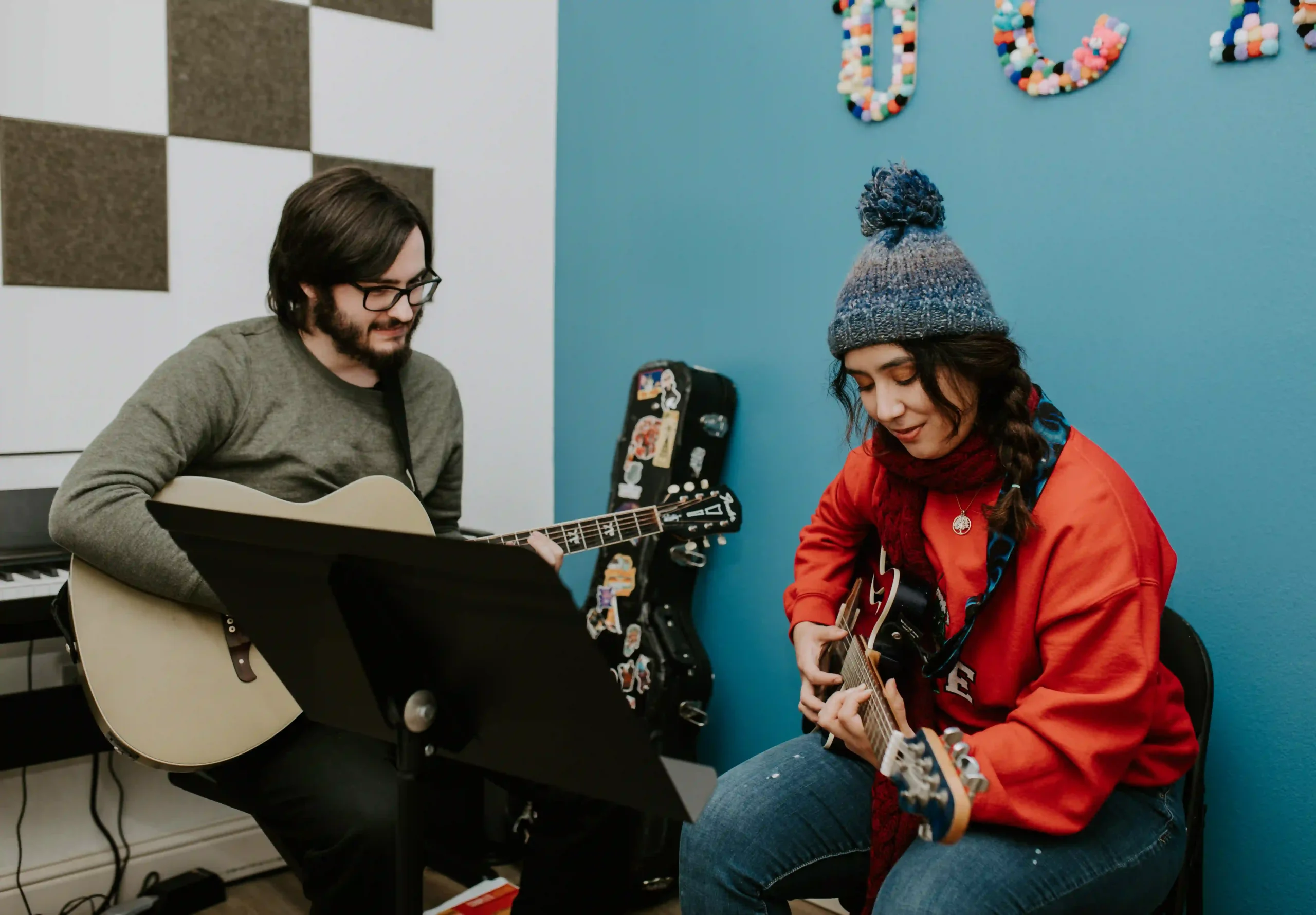
How to Play Guitar: Beginner Step-by-Step Plan
Reading time: 9 mins 4 sec Learning guitar feels easier when you know what to do first. Start by getting comfortable, tuning the guitar, learning the strings and frets, playing one clean note, practicing a few simple chords, adding a steady strum, and turning those pieces into your first short song. This guide keeps the steps clear, so you don’t waste energy guessing. For the bigger learning path, you can also read our complete beginner guitar roadmap. Ready to Start Your Musical Journey? Expert guidance makes all the difference. Join our Fresno or Clovis studios today. Claim Your Spot Now Table of Contents Highlights Start Here: What Playing Guitar Means Before Beginning: Get Ready Step 1: Learn the Guitar Basics Step 2: Make Your First Clean Sound Step 3: Learn Two or Three Beginner Chords Step 4: Add a Simple Strumming Pattern Step 5: Combine Chords and Rhythm Step 6: Play Your First Song A Simple 7-Day Plan Common Problems & Quick Fixes When to Get Teacher Feedback What to Learn Next FAQs Highlights Foundations: Start with comfort, tuning, and clean first notes. Smart Chords: Learn a few beginner chords before adding speed. Rhythm: Build a steady rhythm with simple downstrokes first. Structure: Follow a 7-day plan that keeps practice focused. Guidance: Know when teacher feedback can help you improve. Start Here: What Playing Guitar Means for a Beginner Playing guitar doesn’t mean mastering the whole instrument on day one. Your first goal is much smaller: make a few sounds that you can repeat. If your first note is clean, your first chord and first song become easier to build. You don’t need to start with music theory, fast solos, or hard songs. Those skills can come later, after your hands understand the basics. Acoustic, electric, and classical guitars can all work for beginners. What matters most is that the guitar feels comfortable enough for you to pick it up often. This guide focuses on a standard six-string guitar in standard tuning. Before beginning guitar Practice: Get Ready Before you play notes or chords, make sure your setup feels calm and easy. A tense body makes simple things feel harder than they should. Sit upright, keep your shoulders loose, and let the guitar rest against your body. Your strumming arm should sit naturally over the guitar instead of reaching or pulling. Tune before every session: E, A, D, G, B, E. Your fretting wrist should feel relaxed. Don’t bend it into a painful angle just to reach a chord. If a child is learning, check that the guitar fits their body. A guitar that’s too large can make the arm, shoulder, or wrist work too hard. Tune before every session Tune your guitar before you practice. An out-of-tune guitar can make correct notes sound wrong, which can frustrate you even when your fingers are doing the right thing. From thickest to thinnest, the standard string notes are E, A, D, G, B, and E. The thickest string is the 6th string, and the thinnest string is the 1st string. Use a clip-on tuner, app tuner, or built-in tuner. Don’t rely on your ear at the very start, because a tuner gives you a clear target. Pick or fingers? You can use a pick or your fingers. Choose one for today, so you don’t overthink your first session. If you use a pick, hold it lightly. A tight grip can make your hand stiff and your strum harder to control. If you don’t have a pick, use your thumb or fingers for simple notes and soft strums. The goal right now is clean sound, not perfect technique. Step 1: Learn the guitar basics You’ll Use First Learn the strings, frets, fretboard, headstock, tuning pegs, and sound hole or pickups. Press the string just behind the metal fret strip, using your fingertip to avoid touching nearby strings. The frets are the thin metal strips across the neck. When you press a string behind a fret, you change the note. Your fretting-hand fingers are usually numbered like this: Index finger Middle finger Ring finger Pinky finger Point to each part before you play. This small step helps you follow lessons, chord charts, and simple practice instructions without getting lost. Use the easiest fretting rule Press the string just behind the fret. Don’t press right on top of the metal strip, and don’t press too far back. Use your fingertip instead of a flat finger pad. This helps stop your finger from touching nearby strings by accident. Your thumb should support the back of the neck without squeezing too hard. Think “steady,” not “tight.” Step 2: Make Your First Clean Sound Start with one note before you try a chord. Pick any string and place your index finger just behind a fret. Pluck the string once. Listen to the sound, then release your finger. A clean note should ring out clearly. It shouldn’t sound like a dull thud, a buzz, or a scratchy noise. If the note buzzes, move your finger closer to the fret. If it sounds muted, press with your fingertip and make sure another finger isn’t touching the string. Do this slowly three to five times. When you can repeat the note without strain, you’re ready for the next step. This tiny win matters because it teaches your hand how much pressure it needs. That control makes chords, melodies, and later songs easier. Step 3: Learn Two or Three Beginner Chords Chords are groups of notes played together. They’re one of the fastest ways to make your guitar sound like music. Start with two or three easy open chords. Good examples include Em and G, or Em, G, and D. Don’t try to learn every chord today. You’ll move faster if you start small and build clean habits. For deeper chord practice, use this beginner guitar chords guide. It covers what chords are, beginner chord options, chord charts, practice tips, and common mistakes. Practice one chord at a time Place
What Is ELOP? Ultimate Guide to After-School Programs
Estimated reading time: 8–10 minutes If you’re trying to understand ELOP, the simplest way to think about it is this: it’s a California state-funded program that helps schools offer learning opportunities outside regular class hours. Enhance Your District’s ELOP Offerings Partner with United Conservatory to bring high-impact music and arts enrichment to your students. Inquire About Partnership Table of Contents Highlights What Is ELOP? How ELOP Works Understanding ELOP Funding Who Qualifies? Program Requirements The Role of After-School Programs Types of Programs Partnering with Enrichment Providers ELOP + Arts & Music Building a Successful Program Frequently Asked Questions Highlights California-funded: Supports expanded learning for TK–6 students. Comprehensive: Covers before-school, after-school, and summer enrichment. Equity-focused: Prioritizes low-income, English learners, and foster youth. Beyond Academics: Focuses on creativity, STEM, and social-emotional growth. Sustainable: Helps districts build consistent, long-term enrichment pipelines. What Is ELOP? (Expanded Learning Opportunities Program Explained) ELOP allows students to keep learning before school, after school, and even during summer or intersession breaks. This approach is often called “expanded learning” because it goes beyond traditional classroom instruction and opens the door to more flexible, engaging experiences. At its core, the program is about equity. It ensures that more students—not just a select few—can participate in activities like music, arts, STEM, and social-emotional learning in a structured environment. How ELOP Works (Simple Breakdown for Schools & Parents) The state provides the funding, school districts decide how to allocate it, and individual schools bring programs to life. In many cases, schools either run programs internally or partner with experienced providers who specialize in enrichment. ELOP is designed mainly for students in Transitional Kindergarten through 6th grade. These early years are critical, which is why the program focuses heavily on providing support during this stage. What Is ELOP Funding? (How It’s Allocated & Used) ELOP funding comes from the state and is distributed to school districts on an annual basis. This ongoing funding allows schools to plan ahead and build programs that aren’t just temporary, but sustainable over time. What ELOP Funds Can Cover Hiring instructors and support staff Partnering with enrichment providers Purchasing materials and supplies Providing transportation when needed Who Qualifies for ELOP Programs? While all TK–6 students can participate, certain groups are given priority to ensure fairness and access. Schools must prioritize low-income students, English learners, and foster youth. ELOP Program Requirements (What Schools Must Deliver) Every program must include a balance of academic support, enrichment activities, and social-emotional learning. Programs must also be inclusive, student-centered, and culturally responsive. Staffing plays a big role in program quality. Schools must follow specific staff-to-student ratios, such as approximately 10:1 for younger students and 20:1 for older elementary students. Why After-School Programs Are Central to ELOP After-school programs are one of the most practical ways to deliver ELOP. They fit naturally into students’ schedules and provide a smooth transition from structured learning to enrichment activities. Students gain access to a environment where they can explore new interests, leading to improved focus, confidence, and overall engagement in school. Types of Programs Schools Can Offer One of ELOP’s biggest strengths is flexibility. Schools can design programs that match their students’ interests: Arts & Music: Expressing creativity while building discipline. STEM & Innovation: Introducing coding, robotics, and problem-solving. Academic Support: Tutoring and homework help. Physical Wellness: Focusing on movement and health. How Schools Can Partner with Enrichment Providers Many schools choose to work with enrichment providers to deliver specialized programs. Providers bring expertise, structured curriculum, and trained instructors, making it easier for schools to meet ELOP requirements without overextending internal resources. ELOP + Arts & Music: A High-Impact Combination Arts and music programs are especially effective because they combine engagement with skill development. Students are more likely to participate consistently when they enjoy what they’re doing. Programs like those offered through United Conservatory of Music & Arts show how structured arts education aligns perfectly with ELOP goals. How to Build a Successful ELOP Program Building a strong program involves identifying student needs, defining clear goals, and choosing the right mix of academic and creative programs. Partnering with experienced providers can streamline this process significantly. Frequently Asked Questions What is the ELOP program? It’s a California-funded initiative that supports expanded learning outside regular school hours for TK–6 students. What is ELOP funding used for? It supports staffing, curriculum providers, materials, and transportation for enrichment activities. Can ELOP run during the summer? Yes, summer and intersession programs are a core part of the ELOP mandate. Elevate Your District’s Enrichment Bringing high-quality music and arts into your school district has never been easier. We provide the instructors, the instruments, and the curriculum—all aligned with ELOP standards. If you are looking to build a meaningful partnership that impacts students and satisfies state requirements, we are here to help. Call 559-249-2851 Start a Partnership Call Disclaimer: This article is for informational purposes only. ELOP guidelines may change; please refer to official California Department of Education resources for compliance decisions.
How to Learn Guitar Chords for Beginners
Estimated reading time: 4 mins 11 sec Interactive Chord Explorer Select a chord to see the fingering and hear how it sounds. C Major G Major D Major E Major A Major A Minor E Minor D Minor Strum Chord Learning guitar chords for beginners is one of the quickest ways to start playing real songs. If you follow a clear plan, you can play simple music in a short time. This guide shows you what chords are, which ones to learn first, and how to practice them the right way. You’ll build a strong base without feeling lost. Single notes still matter, but chords let you hear full music right away. That quick progress keeps you motivated. Unlock Your Musical Potential Today! Spots are filling fast for our Guitar Lessons. Don’t miss the chance to start playing the music you love. Claim Your Spot Now Table of Contents Highlights Why Learning Chords Is the First Step Understanding the Basics Essential Beginner Chords Acoustic vs. Electric Chords Using Chord Charts & Sheets How to Practice Effectively Tips to Learn Faster Highlights Foundational Knowledge: Understand what chords are and how they work. Smart Start: Learn the most useful beginner chords first. Progressive Skill: Improve your chord switching step by step. Habit Building: Avoid common beginner mistakes early. Efficient Practice: Use simple tools to practice faster. Why Learning Guitar Chords Is the First Step Chords are groups of notes played together, and they form the base of many songs. That’s why starting with chords helps you play music sooner. When you learn chords first, you can follow along with songs faster. This makes practice more fun and easier to stick with. Single notes still matter, but chords let you hear full music right away. That quick progress keeps you motivated. Understanding the Basics of Guitar Chords What Is a Guitar Chord? A chord is usually made of three or more notes played at the same time. On guitar, you do this by pressing several strings and strumming them together. Each chord has a shape you can memorize. Parts of the Guitar You Need to Know Before you start, you need to know a few key parts: Frets: The metal lines on the neck Strings: Numbered 1 (thinnest) to 6 (thickest) Neck: Where your fingers press the strings Headstock: Where tuning pegs are found Knowing these helps you follow lessons and avoid confusion. How to Read a Guitar Chord Chart A guitar chord chart shows you where to place your fingers. Vertical lines represent strings, while horizontal lines represent frets. Dots show finger positions, and an ‘X’ means do not play that string. Open circles mean you play the string “open” (no fingers pressing down). Don’t try to learn everything at once. Focus on one chord at a time. Essential Guitar Chords for Beginners Start with the most common basic guitar chords. These are called open chords because they use open strings, making them much easier for beginners to master without needing immense finger strength. C, G, D, E, A Major: The building blocks of pop, rock, and folk. Am, Em, Dm: Minor chords that add emotional depth to your playing. Easy Guitar Chords vs Barre Chords Easy guitar chords use simple finger shapes and don’t need much strength. They’re perfect when you’re just starting. Barre chords are harder because one finger presses multiple strings. It’s best to learn them later when your fingers get stronger. Acoustic Guitar Chords vs Electric Guitar Chords Acoustic guitar chords and electric guitar chords use the same shapes. The difference is how they feel. Acoustic guitars can feel harder to press, while electric guitars are usually softer. But your skills work on both. Using Guitar Chord Charts and Beginner Chord Sheets A guitar chord chart helps you see where your fingers go. It removes guesswork when learning new chords. It’s one of the easiest tools to speed up your learning. How Beginner Chord Sheets Help: A beginner chord sheet puts common chords in one place. You can use it during practice to stay organized. Over time, try to rely on memory instead. Step-by-Step: How to Practice Guitar Chords Effectively Proper Finger Placement and Technique Good technique helps your chords sound clear. Press close to the fret (not on it), and keep your fingers curved to avoid accidentally muting adjacent strings. Place your thumb behind the neck for support. If something sounds off, adjust your fingers slightly. Switching Between Chords Smoothly Switching chords is a key skill you need to build. Start slow with simple pairs like G to C. Focus on clean movement before speed. As you improve, your transitions will feel more natural. Building Muscle Memory: Your fingers learn through repetition. Practice daily for 10–15 minutes. Short and steady sessions help more than long, random ones. Over time, your hands will remember shapes without thinking. Common Beginner Mistakes to Avoid Pressing too hard or too soft. Muting strings by accident. Skipping practice days. Jumping to hard chords too soon. Fixing these early makes learning smoother. Tips to Learn Guitar Chords Faster Practice smart, not just hard. Use real songs for motivation—even simple 2-chord songs can make practice feel rewarding. Develop finger strength and flexibility; your fingers may feel weak at first, but with regular practice, strength and control will improve naturally. If you want to dive deeper into your journey, check out our Ultimate Guitar Guide for Beginners. When to Move Beyond Basic Guitar Chords You’re ready to move forward when you can switch chords smoothly, your chords sound clean most of the time, and you can play simple songs without stopping. At this point, you can try more advanced chords and techniques. How This Fits Into Your Guitar Learning Journey This guide is one step in your full learning path. Once you’re comfortable with chords, you can explore rhythm, songs, and different guitar styles. Small, steady progress will lead to big results over time. Conclusion Learning guitar chords for beginners is one of the
The Ultimate Guitar Guide for Beginners
Estimated reading time: 10–12 minutes So you want to play guitar. Maybe you’ve been putting it off for years. Maybe you picked one up at a friend’s house, strummed something that vaguely resembled a chord, and thought—yeah, I want to do that. Good news: you don’t need talent. You don’t need years of free time. You just need a plan. This guitar guide is that plan. Unlock Your Musical Potential Today! Spots are filling fast for our Guitar Lessons. Don’t miss the chance to start playing the music you love. Claim Your Spot Now Table of Contents Highlights Which Guitar Should You Get? How Learning Guitar Works How Long It Actually Takes Common Mistakes to Avoid Lessons vs. Self-Teaching Building a Practice Routine When You’re Ready to Go Further Frequently Asked Questions Highlights Any guitar works: What matters most for beginners is comfort, not the type or price tag of the instrument. Real progress: With just 15–30 minutes of daily practice, you can play real songs within 1–2 months. Consistency is key: Short, frequent practice sessions build skills much faster than occasional long ones. Lessons help: While self-teaching works, lessons help you avoid bad habits that are hard to fix later. Right order: Learning in the correct sequence—chords, then rhythm, then songs—prevents frustration. First Things First: Which Guitar Do You Even Get? This is where most beginners overthink things. Acoustic? Electric? Classical? Here’s the honest answer—it doesn’t matter as much as people say. What actually matters is picking a guitar that fits the music you want to play. If you dream of strumming around a campfire, start acoustic. If you grew up listening to rock and couldn’t care less about campfires, start electric. Classical guitars with their nylon strings are easier on your fingertips early on, but they’re built for a specific style. The best guitar for a beginner isn’t the most expensive one, or the prettiest—it’s the one that’s comfortable enough to make you want to pick it up every day. Check that the neck fits your hand, the strings aren’t brutally hard to press, and it holds a tune. That’s it. Don’t Skip the Accessories A guitar alone won’t cut it. A few basics make a real difference: Tuner: Non-negotiable. Playing out of tune makes everything sound wrong and messes with your ear training. Picks: Grab a variety pack. You’ll figure out your preference quickly. Capo: Lets you play songs in different keys without learning new chord shapes. Strap: Keeps the guitar stable so you’re not fighting gravity while you play. Metronome: Feels boring, builds great timing. Worth it. Learning Guitar Isn’t a Mystery—Here’s How It Actually Works People make learning guitar sound complicated. It’s not. There’s a logical order, and if you follow it, you’ll make steady progress without spinning your wheels. Get the Basics Out of the Way (Day 1) Before you play anything, spend 10 minutes learning the parts of the guitar. Know your strings—from thickest to thinnest, they go E, A, D, G, B, E. Know what a fret is. Know how to hold the guitar without tensing up. Chords Are Everything Most of the songs you love are built on a handful of chords. Start with the open chords: C, G, D, E, A, Am, Em, and Dm. Learn to press them cleanly. Then learn to switch between them without stopping to think. Rhythm Makes You Sound Like a Real Player A guitarist with decent rhythm sounds musical. A guitarist with perfect chord shapes but shaky timing sounds like they’re still practicing. Start with simple downstrokes and add upstrokes when that’s solid. Play Actual Songs As soon as you know two or three chords, find songs that use them and play them. It doesn’t matter if they’re messy at first. Playing real music builds muscle memory faster than any drill. How Long Does This Actually Take? With consistent daily practice, most beginners can strum through simple songs within one to two months. To play a wide range of songs confidently—including ones with barre chords and cleaner transitions—expect six to twelve months. The variable that matters most isn’t talent; it’s consistency. Fifteen focused minutes every day beats a two-hour Sunday session every week. Frequent short practice sessions strengthen neural pathways for motor skills more effectively. The Mistakes That Slow Beginners Down Rushing to songs before chords are solid: Skipping the basics means building on a shaky foundation. Ignoring posture: A tense wrist or awkward hand position causes problems later. Fix it early. Practicing without a metronome: You think your timing is fine. It probably isn’t. Inconsistent practice: Skipping days and then cramming leads to plateaus and frustration. Playing a guitar that doesn’t fit: If your guitar is uncomfortable, you’ll subconsciously avoid it. Should You Take Guitar Lessons or Go It Alone? Plenty of great guitarists are self-taught, but self-study can’t give you someone watching your hands and telling you when something’s wrong. Bad habits in guitar are sneaky—a slightly tense wrist or timing that drifts can be hard to hear yourself. The most effective approach is a combination: take lessons to build the right foundation and get feedback, then practice on your own between sessions. At United Conservatory of Music & Arts, our instructors in Fresno and Clovis work with students of all levels to catch these habits early. Building a Practice Routine That Doesn’t Burn You Out For beginners, 15–30 minutes a day is genuinely enough to make progress. Here’s a simple structure: Warm up (2–5 min): Slow finger stretches or a simple scale. Chord work (5–10 min): Drill the transitions that give you trouble. Song practice (5–15 min): Apply your chords to something you actually want to play. One technique (5–10 min): Picking patterns or new chord shapes. When You’re Ready to Go Further Once you’ve got open chords down, the next big leap is barre chords. They’re tough, but they unlock a massive chunk of the song catalog. From there, scales like the minor pentatonic open up lead guitar, melodies,
Learn Acting: Why Your Child Should Take Acting Lessons
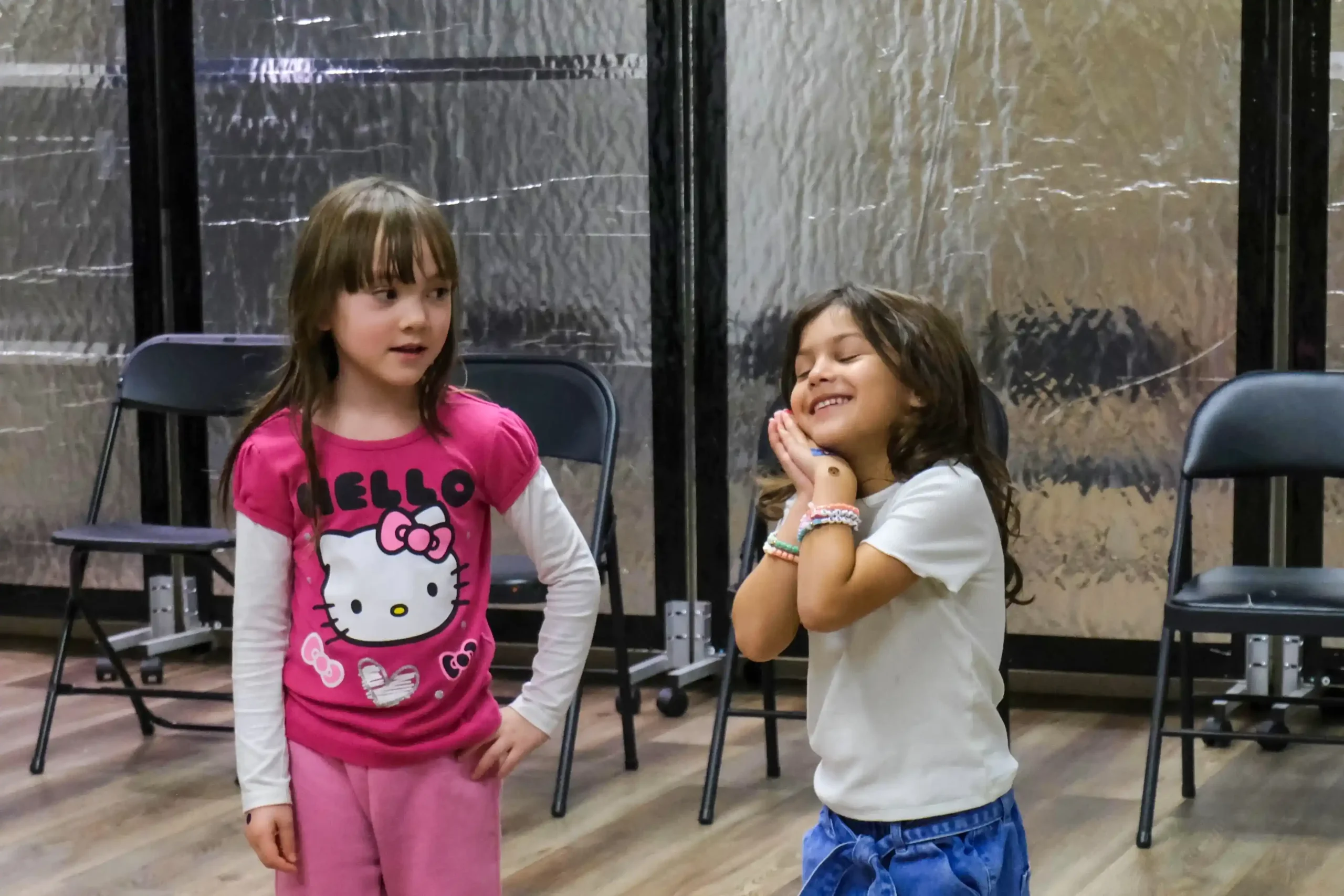
You’ve probably seen your child put on a “show” in the living room, or maybe you’ve watched them struggle to find the right words during a school presentation. Either way, you’re here because you’re thinking about acting training to strengthen their performance abilities. It’s important to note that this isn’t about turning your kid into a child star (unless that’s the goal). It’s about giving them a toolkit for life. In a world where screens are everywhere, the ability to stand in a room and connect with another person is a superpower. Here are the reasons why acting training will help your child grow: Unlock Your Child’s Confidence Today! Spots are filling fast for our upcoming Acting Classes. Don’t miss the chance to give them a toolkit for life. Claim Your Spot Now Table of Contents Highlights Why You Should Consider Beginner Acting Classes Finding Acting Classes Fresno Parents Can Get Behind The UCMA Approach: Storytelling as a Life Skill Why Local Expertise Matters in Acting Classes in Fresno CA Improving the “Instrument” in Beginner Acting Classes Mastering Auditions to Land the Perfect Role The Power of “Yes, And” The Importance of Script Analysis Vocal Health and Projection Building Emotional Intelligence The Role of the Parent in the Process Why UCMA is the Right Choice for Fresno Families Highlights Social intelligence: Theater acts as a “social gym” where kids build real-world confidence and learn how to “play the game” of everyday social interactions. Screen-free growth: It provides a necessary break from digital saturation to focus on human connection. Communication tools: Students master active listening and body language through standard acting training techniques. Emotional resilience: Acting teaches children how to handle mistakes and pivot under pressure. Why You Should Consider Beginner Acting Classes Most parents think theater is just for extroverts. The fundamentals of acting are appropriate for anyone, especially shyer students that struggle to come out of their shell. Beginner acting classes act like a social gym. It’s a place where kids can “try on” different personalities and see how they fit. They learn to develop their unique voice and that their emotions aren’t something to hide, but something to use. Finding Acting Classes Fresno Parents Can Get Behind When you start looking for a program, don’t get distracted by flashy websites promising “Hollywood Discovery.” There are many online sites that have a “pay to play” attitude, guaranteeing more exposure in the industry. However, if your student wants to be a Hollywood star they won’t get far without knowing how to act. What you really want is a place that focuses on the fundamentals—the actual craft. When you’re browsing for acting classes in Fresno, look for a conservatory that prioritizes the student’s well-being and creative growth over industry hype. You want instructors who have actually worked in the business and know that a supportive environment is the only place where true learning happens. The UCMA Approach: Storytelling as a Life Skill We always believe that theater is fundamentally the art of storytelling. Every student actor is really just learning how to be an effective communicator. In a typical acting class for beginners, we break down communication into three core pillars: Listening Reacting Being present There is a classic phrase: acting is reacting. If your child can master these on a stage, they can master them in a job interview or a college presentation twenty years from now. Why Local Expertise Matters in Acting Classes in Fresno CA There’s a specific kind of energy your child can get from in-person training that just can’t be replicated on a screen. Being in a room with other young artists forces a level of “active listening” that is rare in the digital age. If you’re hunting for acting classes in Fresno, CA, for your child, make sure the school emphasizes the “ensemble.” Acting is a team sport. Your child learns that they’re only as good as the person they’re working with, which builds a level of empathy and teamwork that stays with them forever. Improving the “Instrument” in Beginner Acting Classes We call the body and voice the actor’s instrument. In most beginner acting classes, children are taught to breathe from their diaphragm and project their voice without straining. This has huge benefits outside of acting. It helps with public speaking anxiety and ensures that when your child has something important to say, they have the breath support to say it clearly. It’s about building a physical presence that commands respect without being forceful. Mastering Auditions to Land the Perfect Role Local theater opportunities for youth host auditions with industry standard expectations. Learning the foundations of acting will help your student navigate these stressful moments. Even well trained actors get nervous at auditions but they always rely on acting fundamentals: being present in the moment, breathing, and doing your best. Our friendly and experienced staff can coach your student to find the right monologue and/or song to help them get cast. The Power of “Yes, And” Improvisation is one of the most important things we teach. The rule of “Yes, And” means you accept whatever your partner gives you and you add to it. This teaches kids to be flexible and grateful for the information their scene partner has provided. If something goes wrong—and in life, something always goes wrong—they don’t freeze up. They pivot. This kind of mental discipline is what separates great actors from good ones, and successful adults from stressed-out ones. The Importance of Script Analysis Acting is also a literary exercise. Before a student can play a scene, they have to understand the text. We teach them to look for “clues” about their character and the story in the dialogue. What does the character say about themselves? What do other people say about them? This builds critical thinking skills that help with schoolwork as well, specifically in English and Social Studies. It’s about looking beneath the surface to find the “subtext”—the hidden meaning that isn’t always written down. Vocal
